


The Difference between Simulated Dinosaur Model Silicone Material and GFRP
In some amusement parks, parks, and districts, we can often see the existence of simulated dinosaur models, which are generally made of silicone material, but some are made of glass fiber reinforced plastic. What is the difference between these two materials?
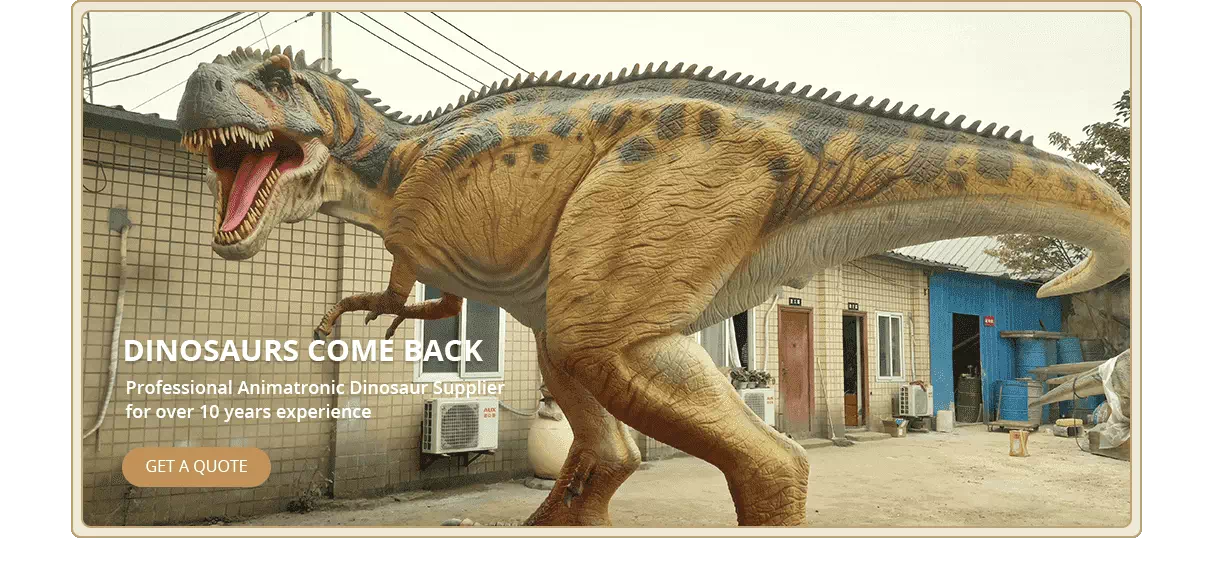
Animatronic dinosaurs have been popular since the last century, and their production technology is very mature. Motors and connecting rods are used to control everybody's movement of dinosaurs.
Materials
1. Silicone material
Silicone is also called rubber material. This is the most common type of simulated dinosaur model. This material uses sponge as the base and then applies silicone as the skin. This material is soft, flexible, and has a very real touch. And it can be equipped with a motor and a transmission structure inside to make an electric simulation dinosaur model with action functions.
Since the silicone material cannot be molded using a mold, the cost is higher after the motor control program is installed, which is about 2000 per meter on average. However, the silicone material has good elasticity and airtightness. It can resist the sun and rain when placed outdoors, but it is easy to be torn by tourists and cause damage.
2. FRP material
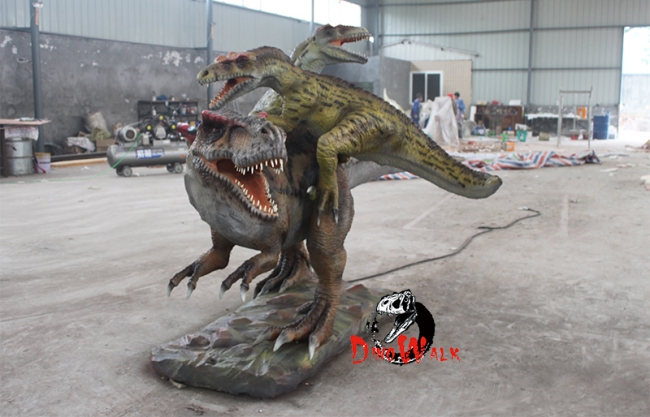
FRP simulated dinosaur models are collectively referred to as sculptures. This material is hard and can prevent certain man-made damage factors, and its modeling is more delicate than the silicone simulated dinosaur model. FRP is made of epoxy resin and matrix, with glass fiber as reinforcement material. The static glass fiber reinforced plastic simulation animal production process is to first make a mud mold, then brush the wax oil on the mud mold and use epoxy resin and glass fiber to turn the mold to make a glass fiber reinforced plastic mold that is exactly the same as the clay mold, and then use the mold to make the simulation The rough animal model is polished and colored to complete the final product. The production process is to use the mud to shape the mold and then make the mold, and then form it in one piece, so if there are more models of the same size, you can use FRP material.
The surface of the glass fiber reinforced plastic is hard, and the motor cannot be installed to produce dynamic effects. And long-term outdoor placement will not be easily destroyed. But years of sun and rain will cause the FRP to fade and crack.
The above is the difference between the silicone material of the simulated dinosaur model and the glass fiber reinforced plastic. Both materials have their own advantages. Users can choose the suitable material according to their needs.
Appearance and Realism
Silicone – Offers a more realistic look and feel. Its softness allows for natural skin folds, fine details, and realistic movement when animatronics are used.
GFRP – Can be painted with high detail but feels hard to the touch. Better for static, large-scale models where tactile realism is less important.
Weight
Silicone – Heavier than GFRP due to its density, especially when used in full-body covering.
GFRP – Lightweight yet strong, making transportation and installation easier for large exhibits.
Movement Capability
Silicone – Perfect for animatronic dinosaurs because its flexibility allows for realistic motion. It can stretch, compress, and bend with mechanical movement.
GFRP – Rigid and unsuitable for moving parts; best for static dinosaur sculptures.
Best Use Cases
Silicone Dinosaurs – Indoor animatronic models, interactive exhibits, or premium lifelike displays.
GFRP Dinosaurs – Outdoor static models, large-scale decorations, and budget-friendly permanent installations.
Comparison Table
| Feature | Silicone Material | GFRP (Glass Fiber Reinforced Plastic) |
|---|---|---|
| Flexibility | High – soft and stretchable | Low – rigid and hard |
| Realism | Very high – lifelike skin | High – realistic paint, hard surface |
| Durability | Good, elastic, less UV proof | Excellent, very weather-resistant |
| Weight | Heavier | Lighter |
| Movement Capability | Ideal for animatronics | Not suitable |
| Cost | Higher | Lower |
| Best Application | Moving models, close-up view | Static displays, large outdoor models |
When choosing between silicone and GFRP for simulated dinosaur models, the decision largely depends on your budget, installation location, and whether movement is required.
For realistic, interactive, or animatronic dinosaurs, silicone is the best choice.
For static, cost-effective, and outdoor displays, GFRP offers a durable and lightweight solution.
The information is provided by the silicone rubber animatronic dinosaur factory.