## Understanding How Oceanographic Center Animatronic Marine Animal Works
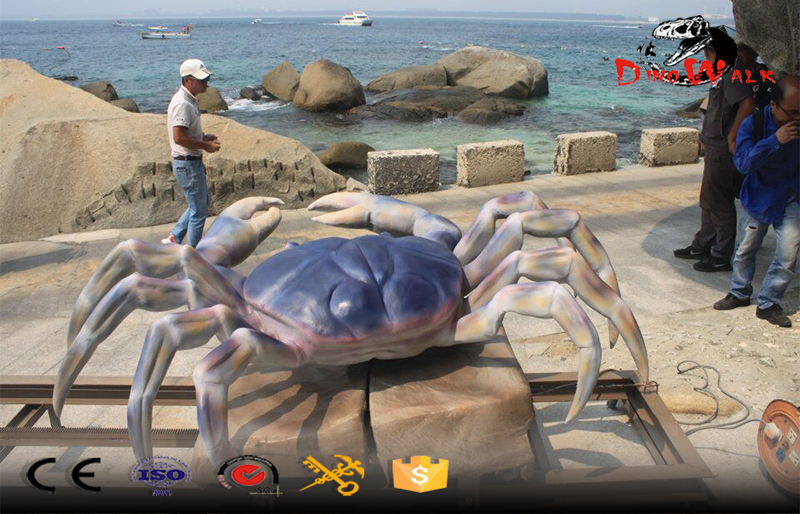
The Oceanographic Center Animatronic Marine Animal (OCAMMA) is at the forefront of marine exploration and education, harnessing advanced technology to create lifelike robotic marine creatures. These animatronic models not only capture the attention of audiences but also serve as critical tools for research and outreach in marine biology.
At its core, the OCAMMA operates through a sophisticated array of components designed to mimic the behaviors and movements of real marine life. The primary elements include high-precision servos, hydraulic actuators, and an intricate control system. High-precision servos allow for fine motor control, enabling animatronic models to imitate realistic swimming motions and other behaviors. Hydraulic actuators contribute to the models' ability to perform more exaggerated movements, such as those found in larger marine animals, enhancing the visual impact and educational value.
The control system employs advanced algorithms that coordinate the various components to produce fluid and lifelike movements. Using sensors, the models can respond to environmental stimuli, creating an interactive experience for viewers. For example, when part of the audience approaches the animatronic dolphin, the system can trigger a playful leap or splash, captivating onlookers and emphasizing the significance of marine conservation.
Efficient production processes are essential for the OCAMMA, which utilizes a blend of additive manufacturing (3D printing) and traditional fabrication methods. 3D printing allows for rapid prototyping and customization of parts, significantly reducing production time and costs. The ability to produce intricate designs with precise tolerances means that animatronic figures can be customized to represent a diverse array of marine species, from the smallest fish to the largest whales.
In practice, OCAMMA's animatronic models find application in various scenarios, including educational exhibits, marine wildlife research stations, and public aquariums. For instance, a marine educational program may use these lifelike models to teach students about the anatomy and behavior of specific species in a way that is both engaging and informative. Similarly, researchers can utilize them to simulate interactions in marine ecosystems, enhancing the understanding of complex ecological roles.
In conclusion, the integration of advanced technology within the Oceanographic Center Animatronic Marine Animal provides tremendous value in modern manufacturing processes. It not only streamlines production but also enriches educational and research initiatives in marine sciences. For inquiries regarding suppliers or to learn more about how our animatronics can benefit your project, please feel free to contact us.


 Exhibitions Dinosaur Costumes